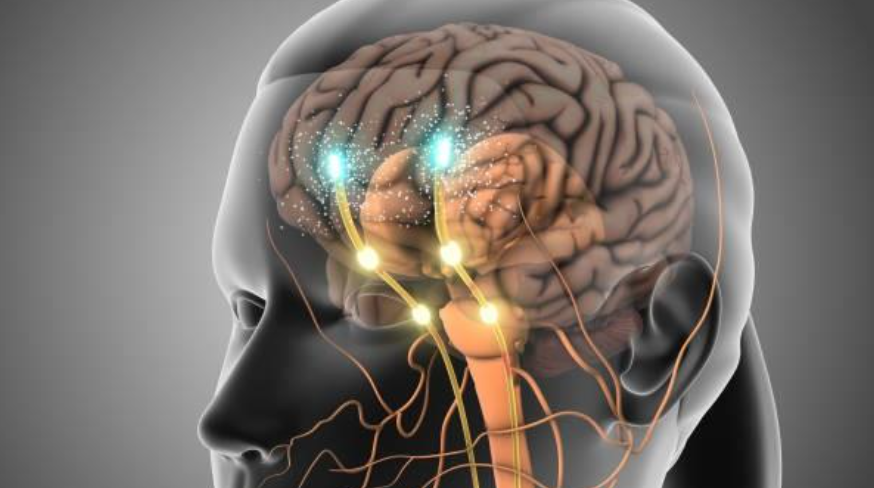
Understanding How Dopamine, Sexual Stimulation, and Modern Pornography Affect the Brain

Conversations about addiction—especially when pornography is involved—can easily become confusing.  

This guide will walk you through these misunderstandings in clear, practical language, helping you understand how the brain actually responds to sexual images, sexual stimulation, and addictive patterns of behaviour. 


Error #1: “Dopamine does not underlie addiction.” 

Dopamine is often misunderstood. It’s true that dopamine does many normal things in the body—helping with movement, motivation, and decision-making. But plenty of online commentary jumps from that fact to the claim that dopamine is irrelevant to addiction. According to every major expert in addiction neuroscience, this simply isn’t true. 

Addiction of any kind—whether to a substance or a behaviour—depends on repeated bursts of dopamine. When someone engages in an activity that the brain interprets as rewarding, dopamine is released. If those bursts are strong and repeated, the brain begins forming powerful learning loops. This process is not unique to addiction; it’s the same kind of learning that helps us form habits. But in addiction, the learning becomes deeply ingrained in ways that override healthy choice. 

For example, when someone regularly views pornography, the dopamine spikes associated with arousal pair the reward with whatever cues came right before it—being alone, opening a laptop, scrolling to a certain site, a feeling of stress, or even a specific name or fantasy. Over time, these cues begin to trigger dopamine by themselves. This is why cravings often feel like they come “out of nowhere.” 

Another common misunderstanding is that dopamine is the “pleasure molecule.” Dopamine isn’t about pleasure itself—it’s about wanting, looking, anticipating, and seeking. Pleasure chemicals are different. But when dopamine’s “wanting” system becomes overtrained, it can lead to compulsive behaviour—wanting long after the pleasurable effects have faded. This helps explain why someone might continue a behaviour even when they no longer enjoy it or when it begins to harm relationships, work, or mental health. 

This learning process is now understood as a major hallmark of addiction. Modern definitions of addiction—including those from the American Society of Addiction Medicine—consider addiction a disorder of reward learning. In other words, it’s not only about behaviour, and it’s not only about chemicals—it’s about how the brain has been trained over time. Once these pathways are reinforced, they become like deep grooves that are easy to fall back into unless someone makes active, sustained efforts to retrain the brain. 


Error #2: “Sexual activity is no different from playing with puppies.” 

It’s easy to think that if two activities both activate the reward system, they must affect the brain in similar ways. But not all natural rewards have equal neurological impact. 

Sexual arousal and orgasm produce some of the highest natural dopamine and opioid levels the brain can generate. In fact, animal studies show that the dopamine surge from sexual stimulation is comparable to the dopamine produced by certain drugs. Other natural rewards—like eating or petting a puppy—activate the reward system, but not nearly as powerfully. 

Sexual stimulation is also unique because it activates the exact same nerve cells that drugs like cocaine and opioids stimulate. Food and water do not have that level of overlap. Because of this, sexual arousal has the potential to create stronger learning pathways in the reward system than almost any other natural behaviour. 

This does not mean sex is “bad.” It means sex is powerful. It is meant to be reinforcing because it ensures the continuation of the species. But the same power that makes sexual reward natural and important also makes it vulnerable to hijacking. 

Addictive drugs exploit these same pathways. So can certain behaviours—especially when they combine high dopamine, novelty, repetition, and emotional triggers. Pornography, in particular, activates these reward circuits much more intensely and consistently than natural sexual experiences. 

The brain changes associated with sexual stimulation can be temporary and normal, but pornography’s endless novelty and rapid pace can amplify them. For example, research shows that orgasm leads to temporary reductions in dopamine cell size within a major reward system structure, similar to changes seen with drug use. Other hormonal and neurological shifts also occur exclusively during sexual climax. 

An important study in the year 2000 showed that when cocaine addicts viewed pornography, their brains responded almost identically to when they viewed cues related to cocaine use. In contrast, viewing neutral nature scenes created completely different activation patterns. In other words, sexual content lights up the brain in a very specific way—distinct from ordinary pleasure. 

No one builds the internet’s most profitable sites around watching puppies. They build them around sexual stimulation because of how strongly the brain responds to it. 


Error #3: “Modern porn affects the brain no differently than the static porn of the past.” 

Older generations may remember porn as magazines or VHS tapes—limited, slow, and repetitive. Today’s internet pornography is something entirely different. Modern porn delivers: 

  • Unlimited novelty 
  • Instant access 
  • High-definition video and motion 
  • Algorithm-driven suggestions 
  • A constant path to more extreme or diverse content 

This matters for the brain because novelty triggers dopamine. Research consistently shows that new sexual images produce stronger arousal than familiar ones. When a user can click endlessly to new scenes, they can maintain dopamine spikes far longer than would ever occur in a natural sexual environment. 

Scientists call this type of stimulus supranormal—an exaggerated version of something the brain is designed to find rewarding. The Nobel Prize–winning scientist Nikolaas Tinbergen showed that animals could be tricked into preferring artificial, exaggerated versions of natural stimuli, even to their detriment. Modern internet porn functions similarly: a hyper-stimulating version of sexual cues that can override the pull of real relationships and intimacy. 

Because today’s porn combines powerful sexual reward with unlimited novelty, it can foster stronger conditioning than older forms of porn. This does not mean everyone who uses porn becomes addicted. But it does mean today’s environment poses higher risks, especially for younger brains, which learn quickly and respond strongly to dopamine. 


Why these matters 

These three misunderstandings are often spread by people who want to reduce stigma or help others feel reassured. The intention may be good, but the science is clear: the brain plays a central role in shaping sexual behaviour, habits, and addiction. The genitals may be involved in sexual experience, but the brain is the true driver of desire, motivation, and behaviour. 

Understanding the brain’s role in pornography use doesn’t imply shame—it empowers people. It explains why certain patterns feel hard to change, why cravings can appear suddenly, and why willpower alone is often not enough. Most importantly, it shows that change is absolutely possible, because the same brain that learns unhealthy patterns can also unlearn them and build healthier ones. 

If you or someone you care about is struggling with compulsive pornography use, this knowledge is meant to help—not to blame. With the right support, the brain can adapt, heal, and build new pathways toward healthier, more fulfilling choices. 

Addiction and Compulsion or Something Else in Problematic Pornography Use (PPU)

Series 3 

The terms addiction and compulsion is often a subject for debate in PPU. Some say pornography is not addictive, some say it is. When people present with pornography use that feels “out of control,” and that involves harmful dependencies, they often ask a very understandable question: Is this an addiction, a compulsion, or something else entirely?  

In making an assessment about PPU, I use the definition from:-  

The World Health Organisation ‘s authors of the International Classification of Diseases, 11th Revision (ICD-11) announcing the classification of Compulsive Sexual Behaviour Disorder (CSBD) as a mental illness. The components of this are listed below. 

  1. Being pre-occupied and out of control with persistent repetitive sexual behaviour. 
  1. Continuing with the sexual behaviours despite harmful consequences, i.e., neglecting your health, personal care or other interests, activities and responsibilities and causes a significant impairment in personal, family, social, educational, occupational or other important areas of function. 
  1. Numerous attempts to reduce or stop the sexual behaviour despite adverse consequences or deriving little or no sexual satisfaction from it. 
  1. The pattern of behaviour to control intense, sexual impulses or urges resulting in repetitive sexual behaviour is manifested over a period of time – 6 months or more. 


Distress that is entirely related to moral judgements and disapproval about sexual impulses, urges, or behaviours is not sufficient to meet this requirement. 


Whilst this definition seems to suggest CSBD is an impulse control disorder rather than an addictionI offer services for people struggling with problematic pornography use, pornography addiction, sex addiction and compulsive sexual behaviours.  However, I do agree that these behaviours can be on a spectrum and follow the training and guidance of The Association for the Treatment of Sex Addiction and Compulsivity (ATSAC: www.atsac.co.uk). I offer a flexible approach viewing to make pornography addiction/compulsion approaches more integrative and avoid pathologizing or judging people with diverse sexualities.   


Ultimately my goal is not to label you; you may describe or find you own words for how you are. My aim is to understand your experience so you can regain a sense of control and peace. 

When Pornography Use Feels Like an Addiction 

Some people describe their pornography use as being driven by a powerful desire or craving. The behaviour feels exciting at first—something that brings pleasure, intensity, or escape. Over time, though, they need more time, more variety, or more extreme content to feel the same level of stimulation. This can create a cycle where the brain becomes wired to seek those intense experiences again and again. 

If your experience aligns with this, you might notice: 

  • A strong rush or anticipation before using 
  • Spending more time than intended 
  • Failed attempts to cut back 
  • Using porn to feel better when stressed or lonely 
  • Continuing use even when it has negative consequences 

In this model, the behaviour is being reinforced by pleasure—your brain learns, “This feels good; let’s do it again.” If this fits your pattern, we may focus in therapy on strategies used for addiction-like behaviours: managing triggers, interrupting automatic patterns, building healthier habits, and strengthening motivation for change. 

When Pornography Use Feels Like a Compulsion 

Other people describe something very different. They don’t feel particularly excited by pornography. Instead, they feel pushed toward it by stress, anxiety, shame, boredom, or emotional discomfort. The use is less about seeking pleasure and more about trying to quiet an uncomfortable feeling. 

Signs your pattern might be more compulsive include: 

  • Feeling driven to use porn even when you don’t want to 
  • Using it primarily to numb or escape difficult emotions 
  • Minimal enjoyment during or after use 
  • Immediate guilt or regret 
  • Feeling like the behaviour happens almost automatically 

In this model, pornography works like a temporary relief valve—you feel a little better for a short time, but it doesn’t improve the underlying issue. In therapy, we may focus on emotional regulation, stress coping skills, mindfulness, and breaking the cycle of using porn as a way to soothe discomfort. 

When It’s Both: The Most Common Scenario 

Most people don’t fall neatly into one category. Many start with pleasure-driven use (addiction-like) and then move into emotionally driven use (compulsive). Others begin using porn to cope with stress and gradually get caught up in chasing more intense stimulation. 

What matters is not the label, but understanding the underlying patterns: 

  • Do you use porn to feel good? 
  • Do you use porn to stop feeling bad? 
  • Do you use porn out of habit without thinking? 
  • Do you feel stuck in a cycle of shame that actually fuels more use? 

Therapy often works best when it addresses several parts at once—your emotional world, your habits, your thought patterns, your relationship dynamics, and your coping strategies. 

Moving Toward Change 

No matter which pattern fits you best, there are effective tools you can learn: 

  • Identify triggers and emotional patterns 
  • Build healthier habits and coping strategies 
  • Develop awareness of urges without acting on them 
  • Strengthen intimate or relational connections 
  • Create a lifestyle that supports your values and goals 

Recovery is not about perfection. It’s about gradually building a healthier relationship with your sexuality, your emotions, and yourself. 

Final Thoughts 

Whether your pornography use feels like an addiction, a compulsion, or a combination, the important thing is this: change is possible. You’re not alone, you’re not “broken,” and your experience makes sense given your history, stressors, and emotional needs. In therapy, we’ll work together to understand your unique patterns and build a path toward greater control, confidence, and well-being. 

How Can Problematic Pornography Use (PPU) Present in Therapy?

Series 2 

Problematic Pornography Use (PPU) can present itself in infinite ways. It doesn’t always involve uncontrolled or extreme usage, nor can it be particularly shocking or have an array of deviant themes. What it can do is distract from your sexual wellbeing by skewing your beliefs about how ‘good sex’ should look. PPU can significantly alter your view of your body image, distort your assumption of the intensity of pleasure – that is if there is not constant ecstasy then you are a below-par lover unable to satisfy and, what is seen on screens is what everybody wants.  

Often people present in counselling feeling shame about their PPU because it conflicts with their values and beliefs. It has become such a burden to ‘remember the lies’ to not get caught out and continue to live a secret life of a ‘public self’ and a ‘private self’. For some carrying the shame and the weight of these burdens of who you really are means that watching pornography becomes the go-to inflexible self-soothing strategy. People are caught in a cycle of desperately wanting to stop and desperately can’t stop.   

Typically, PPU presents in therapy due to the partner discovering the pornography and or objecting to it. Often partners are alerted to a change of behaviour, something that ‘feels off’, behaviours ‘don’t quite make sense’. Whenever they ask about those behaviours there are always excuses or responses that are often very damaging to the relationship such as ‘gaslighting’. It becomes a crisis issue in the relationship not only about PPU but moreover the lies and deceit of trying to persuade the partner it’s their imagination.  

 Another common way PPU presents particularly for young men is the inability to form, maintain and sustain a relationship.  Their loneliness is profound. Whether its discovery by a partner or lack of relationships, often there is pornography induced erectile dysfunction (PIED). This term originated within online forums and self-help communities. It is not formally recognised medical condition.   

PIED hold the idea that (over) consumption of pornography can condition some men’s sexual arousal to respond only to the potent on demand stream of constant novelty. That escalation of ‘novelty’ means a searching for more hardcore footage found on more extreme sites (1). Suffers report that the threshold for arousal becomes so warped that sex with a real live person is no longer sufficiently exciting, or the reality of that person- their smell, their sounds and their agency is too far removed from what is being watched on pornographic screens to induce an erection.  Whilst there may be other factors for PIED some studies do suggest a link between ED and PPU (2) 

The PPU partner may not be the only one affected: their partner may feel rejected, lonely, unattractive and angry. Partners can feel betrayed on feeling cheated on. Their home can no-longer feel safe. Their sexual wellbeing is impacted upon on the comparison (wrongly) to the pornography. Pornography videos can be free and paid for such as Only Fans where there are personalised video recordings. Using the joint account to pay a sex worker while distressed over PIED can wreck a relationship. 

Presenting issues of PPU can vary, for example those who have experienced trauma or sexual abuse. Trauma can take the form of complex PTSD where early attachment issues such as domestic abuse, parental rows and separation or abandonment, a parent hospitalised or very ill and bullying by siblings or in school. Pornography can take the form of a violence or degradation allowing the person to re-experience aspects of the trauma in a more controlled way. Past trauma may have left the felling person powerless or helpless, reprocessing their experienced via pornography gives themselves the power to press play -and stop- choose a script without emotional connection. This can be an attempt ‘to fix’, however, using pornography to move from powerlessness to feeling powerful and in control can be highly addictive 

References 

  1. Wilson, G, (2014) Your Brain in Porn. Internet Pornography and the Emerging Science of Addiction. Commonwealth Publishing UK 
  1. Jacobs T et al., Associations between online pornography consumption and sexual dysfunction in young men: multivariate analysis based on an international web-based survey. JMIR Public Health and Surveillance 2021: 7(10): e32542.pmc.ncbi.nim.nih.gov/articles/PMC8569536 

Please see Addiction or Compulsion or Something Else in Problematic Pornography Use (PPU) 

Series 3 

Let’s Talk About Problematic Pornography Use: Series 1-3

Series 1 

Joe’s first experience of pornography was being shown it by his friend on his phone when aged ten. He remembers both the shock and excitement of watching what his family would have viewed as ‘taboo’. He quickly moved from watching standard mainstream pornography to brutal videos of violence and submission screwing his view of people, relationships, sex and life. This distortion encapsulated the duality of his experience of the horror and feeling revolted as well as being secretly fascinated by these acts and wanting to see more. The sad thing is, that little did he know (and how could he), that developmentally his brain and body was experiencing material long before he was ready to understand it and make any sense of it.  

This was to have a catastrophic impact on his life leaving him confused, anxious, isolated, and without relationships as he had lost his erection. He became caught up in a self-perpetuating cycle of performance anxiety and porn-induced erectile dysfunction (PIED). He came to dread being invited to have sex which felt like a humiliation ritual. He became ever more reliant and caught up in a vicious cycle of pornography as his ‘only relationship’ in it being safe and fun – no one was ‘watching me’ and I didn’t l have to see the ‘hurt of rejection in my partner’s eyes’.  Masturbating alone was seemingly his only option, and pornography went from Joe’s refuge to facilitating reclusion to making him feel repulsed with himself.   

Pornography is currently the subject of new legislation as politicians grapple with trying to troubleshoot these sites deemed to be having the most insidious impacts on young people and young adults. The New Online Safety Act (July 2025) states that all sites and apps operating in the UK that allow pornography must verify viewers as aged 18 plus, following research that 8% of children aged 8 to 14 years had visited a digital service in a month (1).  

Regulating pornography has proved to be very challenging, Politicians have made recommendations that depictions of non-fatal strangulation (NFS) should be outlawed (2). In effect, what was barred in person was now disallowed on screens.  Whilst NFS was criminalised by the Domestic Abuse Act of 2021, ‘sexual choking’ was being ‘normalised’ by pornography to the extent that 38% of women aged 18-39 reported being strangled in bed (3).  

AI tools being used as image generators to create fake depictions of people mostly female and almost exclusively non-consensually may be next in line to be considered. Young people’s views of deepfakes of themselves were found to be a greater violation then sending their nude photos because of the total lack of control they had over fabricated images (4).  

Whilst Ofcom research found that approximately 13.8 million UK adults in May 2024; that is 29% viewed pornography in May 2024. Many people would have assessed their personal relationship with pornography to be primarily healthy and not a concern (5). However, for Joe (and people like him) they viewed themselves as having a problematic pornography use (PPU). It is hard to obtain precise figures, but studies estimate PPU affects up to 38% of men and up to 23% of women (6).  

Over the past number of years, I have had an increase in the number of referrals specifically around PPU, causing PIED and inability to form and sustain relationships. Joe and people like him; are often sad and lonely realising they need to begin a therapeutic journey if they are to recover and be able to connect with themselves again and so make lasting enjoyable relationships with others.   

References 

  1. Ofcom. Children’s Passive Online Measurement report 26 June 2025. Ofcom.org.uk/media-use-and-attitudes/media-habits-children/childrens-passive-online-measurement 
  1. Ministry of Justice. Strangulation in pornography is to be made illegal 19 June 2025. www.gov.uk/government/news/strangulation-in-pornography-to-be-made-illegal 
  1. Savanta ComRes. BBC 5 Live Women’s Poll 21 November 2019. Compesglobal.com/wp-content/uploads/2019/11/Final-BBC-5-Live-Tables_211119cdh.pdf 
  1. Internet Matters. The new face of digital abuse children’s experience of nude deepfakes. October 2024. iternetmatters.org/hub/research/children-experience-nude-deepfakes-research 
  1.  Ofcom. Online Nation 2024 Report 28 November 2024. Ofcom.org.uk/siteassets/resources/documents/research-and-data/online-research/online-nation-/2024/online-nation-2024-report.pdf?v=386238 
  1. Bothe B, et al, International Sex Survey Consortium, Kraus SW Problematic pornography use across countries, genders and sexual orientations: insights form the International Sex Survey and comparison of different assessment tools. Addiction 2024:119(5): add 16431(accessed 27 February 2024). 

Please see ‘How can Problems with Problematic Pornography Use Present’? Series 2. 

Categories
Uncategorized

Talk Yourself Out of a Row

Welcome to my blog page. Here you will find a selection of short articles about a wide range of issues that might be helpful to people coming to individual counselling; couples counselling and couples and same sex relations; couples and intimacy; families; sex and porn addiction; counselling for partners of sex addicts and couples counselling and sex addiction.
Some of the articles might include useful tips, referenced extracts from books, news items and other articles that might be of interest and help to my client group,
The first article is:

Talk Yourself out of a Row and Rules for Fair Rows

And each month I will add to my blog
Please do have a browse and if you find something that interests you, please do feel free to share with friends on social media if appropriate.


Talk Yourself Out of a Row
Often newspapers articles, magazines, social media rush to tell us the secrets of successful couples. In reading the blurb we might say – yeah dream on you don’t live my life, or, if only we could be one of those couples! So, is it all a dream or is it possible?
Let’s take a look at what these successful couples do.
Generally successful couples can assert what’s important to them. They can also decide whether a row is worth having and if so, ‘stand their ground whilst maintaining perspective’. They can also ask themselves “Is what I am about to say helpful?” If it’s not then why say it?
Successful couples know it’s not about one winning or one conceding. They can recognise how the other is feeling as well as hold onto their own feelings. They can juggle both sets of feelings at the same time and know when one feels more strongly than the other. Importantly they can take responsibility for how they feel and manage it.
With a deep breath, a little thought and a sense of goodwill anything is possible. Talking yourself out of a row maybe easier than you think?
TALKING to one another is the heart of a successful relationship but how often do we take this for granted and lose the art of meaningful communication?
As time goes by and we become so used to each other we stop talking about our feelings and thoughts. In our busy lives we tend to talk about practical things like what’s for tea and who’s paying the bills.
When couples avoid talking about their feelings, they begin to disconnect and disconnection becomes a rich breeding ground for rows.
A similar disconnect that happens is when people describe themselves as ‘private’ or ‘I just bottle things up’. This can be an excuse for avoiding telling the other how they are feeling convincing themselves that’s its better than confrontation, but, the very thing they wanted to avoid happens as this strategy is more likely to lead to more disconnect and then rows explosive rows.


So how do successful couples actually talk themselves out of a row?

  1. Make time for a 5-minute check-in to talk to your partner about your feelings. This will get you into the habit of talking and listening. You can agree the ground rules first of a couples of minutes each for each person to talk and the other to listen. Quick summary, check for clarification and then it’s the other ones turn. You try your best not to interrupt or prepare your answer before the other has finished.
  2. LISTEN – people think they are listening but they actually aren’t. Listening is focusing on what the other is saying and not the words that you forming in your head – even when you don’t want to hear it!
  3. You need to let your partner know you are listening by keeping eye contact.
  4. Then see if you can summarise back to them what you have heard. This conveys a sense of worth. Your partner is important enough for you to focus, concentrate and want to understand. This is worth its weight in gold!
  5. Interrupting your partner will convey the opposite – giving the message that what you have to say is more important in than what they are saying. You need to give some time to really get what the other is saying.
  6. Communication is a two-way thing so there needs to be equal turn taking even if the other finds talking about their feelings more difficult – vulnerability needs respect.
  7. If you find your body starts to tighten and your tone of voice escalates – BREATHE.
  8. Try using ‘I’ words and not ‘You’ words. Take responsibility for your feelings. It’s not “you make me unhappy” say “I am unhappy with our relationship”.
  9. Also, it is helpful to give compliments and tell you partner what would make you happy and how you would like things to be.
  10. Finally, talk about the issues as they arise instead of bottling up your feelings. Keep the lines of communication open and try to aim for as much understanding as you can – that way you might talk yourself out of a row.


Rules for Fair Rows

Having a fair row involves:

  • Being assertive rather than aggressive
  • Not bringing up grievances form the past
  • Staying with the specific (positive and negative)
  • Using “I” statements – avoiding judging the other
  • Being honest and sensitive
  • Not arguing about detail
    ……You were an hour late!
    ……No, I wasn’t, it was only 10 minutes!
  • Not blaming the other
  • Actively listening and obtaining the other’s agreement about what you heard them saying before responding
  • Tackling only one issue at a time
  • Hanging on in there (unless you are being abused) – aiming for a solution rather than being RIGHT

Finally – remember it is OK to take time out – so long as you come back to resolve the issue